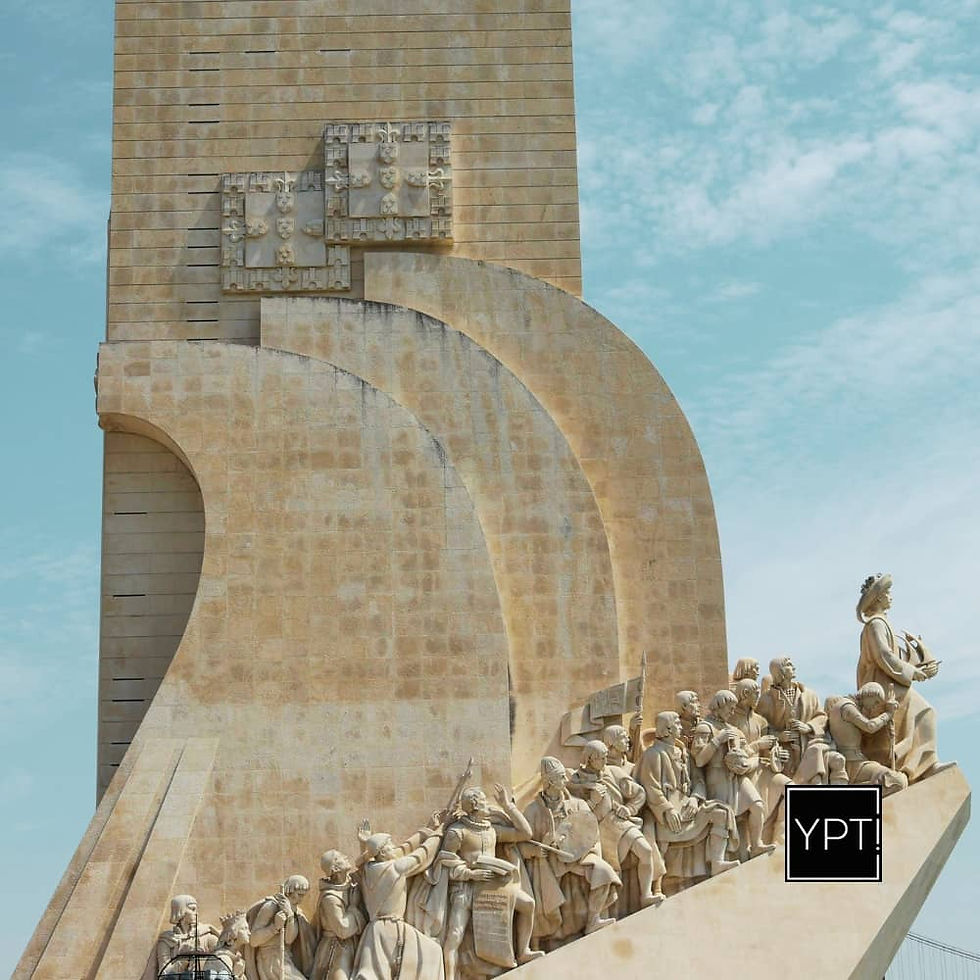
Portuguese Tradition of Stability

Portugal is not a country of abrupt moves.
Change here rarely arrives through sharp turns, radical resets, or political theatrics. Instead, it comes quietly, layered over time, shaped by continuity rather than disruption.
This cultural trait is often misunderstood by outsiders. In a global environment driven by speed, hype, and constant reinvention, Portugal can seem slow. Reserved. Even passive.
But that perception misses the point.
What looks like slowness is, in fact, a deeply ingrained national preference for stability. And for long-term investors — particularly those considering residency and capital allocation through programs like the Portugal Golden Visa — this cultural characteristic matters more than headlines ever will.

A Culture That Prefers Continuity Over Rupture
Portuguese culture is built on endurance.
You see it in the architecture, where centuries-old buildings remain part of everyday life rather than museum pieces. You hear it in expressions passed down through generations, such as “devagar se vai ao longe” — slowly, one goes far.
You feel it in the way institutions evolve, rarely breaking entirely from what came before.
Portugal has experienced revolutions, crises, and external pressures, like any other European nation. But its default response has rarely been radical dismantling. Instead, the country adjusts. It absorbs change. It adapts without erasing its foundations.
This mindset shapes everything from family businesses to public administration. And it creates an environment where predictability is valued above spectacle.
For investors accustomed to volatile policy environments, this cultural preference is not a weakness. It is an asset.
Stability as a National Value, Not a Marketing Slogan
Many countries claim stability. Portugal lives it.
Safety, institutional continuity, social cohesion, and moderate political discourse are not branding exercises here. They are the result of a society that generally distrusts extremes — whether ideological, economic, or social.
This is one of the reasons Portugal consistently ranks among Europe’s safest countries. Not because it over-polices or over-controls, but because its social fabric is built around balance and restraint.
In investment terms, this translates into a country that is cautious about abrupt regulatory shifts. Laws evolve, but rarely overnight. Frameworks are debated, adjusted, and implemented with a preference for gradual transitions.
For capital that seeks preservation as much as growth, this matters.
Why Investors Often Misread Portugal at First
International investors, particularly those coming from fast-moving markets, often approach Portugal with the wrong expectations.
They look for aggressive incentives. Rapid approvals. Loud policy announcements. Grand promises of exponential returns.
Portugal offers none of that.
Instead, it offers something far less dramatic and far more valuable: consistency.
The country does not compete on speed alone. It competes on reliability. Processes may take time, but they tend to move forward. Rules may be adjusted, but they are rarely rewritten mid-process. Institutions may be restructured, but continuity is usually preserved.
This is why many experienced investors, after initial hesitation, come to see Portugal as a long-term strategic base rather than a short-term opportunity.
The Portugal Golden Visa Through this Cultural Lens
The Portugal Golden Visa is often discussed purely in legal or political terms. Thresholds, eligible investments, timelines, and future reforms dominate most conversations.
But understanding the program only through legislation misses a critical dimension.
The Golden Visa exists within Portugal’s broader cultural framework.
This is a country that does not build residency programs as speculative tools. The Golden Visa was never designed as a fast-track transaction. It was conceived as a structured, long-term pathway that aligns foreign capital with national priorities.
Over time, the program has evolved. Investment routes have been adjusted. Eligibility criteria refined. Administrative bodies reorganised.
Yet throughout these changes, one thing has remained consistent: operational continuity.
Applications continue to be accepted. Renewals continue to be processed. Authorities continue working, even amid political debate or administrative reform.
This is not accidental. It reflects a deeper national instinct to preserve functional systems while improving them incrementally.
Political Noise vs. Operational Reality
Portugal is not immune to political discussion. Proposed reforms, public debates, and media speculation are part of any democratic system. However, there is an important distinction that seasoned investors learn to make: the difference between political noise and operational reality.
In Portugal, the presence of debate does not automatically signal disruption. Public discussion does not necessarily translate into immediate policy paralysis. And headlines rarely tell the full story of what is happening at an institutional level.
For the Golden Visa, this distinction is critical.
While discussions around immigration, nationality laws, or investment thresholds may generate uncertainty abroad, the day-to-day functioning of the program has historically remained intact. Files move. Renewals are issued. Processes continue.
Investors who understand Portugal’s cultural approach to governance are less reactive to short-term narratives and more focused on long-term execution.
Why Long-Term Capital Feels at Home in Portugal
Portugal attracts a particular type of investor.
Not those chasing arbitrage or regulatory loopholes, but those seeking a stable European base, legal certainty, and a high quality of life. These investors often value optionality over immediacy — the ability to build a future presence in Europe without constant policy risk.
The Portuguese approach aligns naturally with this mindset.
Residency is treated as a relationship, not a transaction. Investment is framed as a contribution, not an extraction. And time is seen as an ally, not an obstacle.
This is why many Golden Visa investors begin with a single qualifying investment and gradually deepen their ties to the country — expanding portfolios, relocating family members, or pursuing broader business interests in Portugal.
Stability encourages commitment. And commitment tends to attract further capital.
The Psychological Advantage of Predictability to Investors
There is also a psychological dimension to Portugal’s stability that is often overlooked. In uncertain global environments, investors are constantly forced into reactive decision-making. Sudden policy shifts, unexpected regulatory changes, or geopolitical shocks create pressure to act quickly, often at the expense of strategic thinking.
Portugal reduces that pressure.
Its cultural resistance to abrupt change allows investors to plan with greater confidence. To think in five- and ten-year horizons rather than quarterly cycles. To integrate residency, taxation, lifestyle, and capital allocation into a coherent long-term strategy.
This mental clarity is, in itself, a competitive advantage.
Why Portugal Rarely Sells Itself Loudly
Portugal does not aggressively market its stability.
There are no grand slogans proclaiming certainty or predictability. Institutions communicate conservatively. Policies are explained, not advertised.
This can frustrate those looking for reassurance through messaging. But it reassures those who understand that true stability does not need constant affirmation.
When systems work, they speak through continuity, not promotion.
The Golden Visa’s endurance, despite years of speculation and reform, is one example of this quiet confidence. It has not survived because it was protected from change, but because it was allowed to evolve without losing its core purpose.
Stability as a Strategic Filter
In many ways, Portugal’s cultural approach acts as a filter.
It discourages speculative capital seeking immediate gains. It attracts investors who are comfortable with patience, structure, and long-term value creation.
This alignment reduces friction. Investors who choose Portugal tend to stay engaged. They adapt to the system rather than constantly testing its limits.
For residency and investment programs, this mutual alignment is rare — and powerful.
Final Thoughts: Why Culture Matters More Than Frameworks
Legal frameworks can be changed. Thresholds can be adjusted. Eligibility criteria can evolve. But culture moves slowly.
Portugal’s culture of stability, continuity, and measured progress has shaped its institutions for decades. And it continues to shape how programs like the Portugal Golden Visa function in practice, beyond the text of the law.
For investors looking beyond short-term narratives, understanding this cultural foundation is essential.
Portugal does not promise acceleration. It offers durability.
And in an increasingly volatile world, that may be its most valuable asset.
Stay Informed About Portugal
Receive the Portugal Residency & Investment Briefing every month, with practical insights on residency, investment, and the topics that matter most to internationally mobile families.